考博考生生准备要参加博士研究生考试时,必须要先确定准备攻读博士的相关专业,然后选择该专业有招生需求的学校,接下来应该联系博士生导师,只有当博士生导师同意考生报考,考博生才可以报考。所以提前了解博士生导师的学术文章及联系方式很重要,新东方在线特整理了各招收博士院校博导的简介及联系方式供考博生参考。
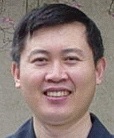
陈少敏
博士、教授
工程物理系副主任
工程物理系近代物理研究所副所长
办公电话: 86-10-62795757
传真: 86-10-62792296
E-MAIL: chenshaomin@tsinghua.edu.cn
教育背景
1991.09.01-1994.06.30: 中科院高能物理研究所,1994年6月获得粒子物理与原子核物理专业方向理学博士学位。
1989.09.01-1991.06.30: 中科院高能物理研究所,1991年6月获得粒子物理与原子核物理专业方向理学硕士学位。
1988.09.01-1988.06.30: 广西大学物理系,1988年6月获得物理学理学学士学位。
工作履历
2005.04.01-至今: 清华大学工程物理系,全职教授。
2004.03.20-2005.02.20: 东京大学宇宙线研究所,日本振兴学会博士后研究员。
1999.12.01-2005.3.20: 加拿大粒子与核物理国家实验室(TRIUMF),Research Associate.
1995.10.01-1998.11.30: 巴黎大学十一分校,法国科研中心粒子物理与核物理研究所直线加速器实验室 Postdoctoral Foreign Researcher. 1994.10.01-1995.04.30: 斯坦福大学直线加速器实验室,Visiting Research Scientist.
学术兼职
2009年-至今: 工程物理系副主任。
2005年-至今: 工程物理系近代物理研究所副所长。
2005年-至今: 清华大学高能物理委员会成员。
2006年-至今:European Physics Journal C 杂志审稿人
2012年-至今: Chinese Physics Letters 杂志审稿人
2010年-至今: 大亚湾实验合作组执委会委员。
2009年-2012年: 大亚湾实验合作组分析协调委员会委员。
研究领域
在粒子物理与核物理研究中,中微子实验以及寻找超出标准模型新物理 是一个非常重要的方向。我感兴趣的领域包括:(1)超新星中微子及低能中微子反应截面的研究;(2)利用中微子振荡实验测定中微子混合参数;(3)利用pion 与kaon 介子衰变寻找电荷-宇称破缺及超出标准模型新物理;(4)利用tau轻子奇异衰变测定奇异夸克质量与CKM夸克混合角Vus。
人才培养:
2006年春季-至今: 粒子物理与核物理实验中的数据分析方法,清华大学研究生课程。
2007年春季-2009年春季: 大学物理A,清华大学本科生课程。.
2008年秋季-至今: 宇宙线探测及物理实验,清华大学研究生课程。
2010年-至今:普通物理,清华大学本科生课程。
研究概况
2012年-2017年: 低能反电子中微子的实验研究,基金委重点项目,项目负责人。
2012年-2017年: 大亚湾中微子实验的物理研究,子课题二:氢俘获与超新星中微子研究,国家重大基础研究发展计划项目和(973计划),科技部,子课题负责人。
2009年-2011年:大型水质期伦科夫探测器的空间粒子物理研究,基金委-日本学术振兴会联合资助项目,项目负责人。
2009年-2011年:中低能中微子实验的若干重要问题的研究,基金委面向项目,项目负责人。
2009年-2011年: 螺旋度压低衰变pienu的实验研究,教育部博士点基金项目,项目负责人。
2006年-2008年:超级神冈实验的中微子物理研究,基金委面向项目,项目负责人。
2007年-2008年:大亚湾反应堆中微子实验电子学板的预制研究,中科院高能物理研究所,项目负责人。
2000年-2005年:长基线加速器中微子实验, NSERC Canada and Canada Foundation for Innovation, 主要参与人。
1999年-2004年:稀有kaon衰变的实验研究, The Natural Sciences and Engineering Research Council and the National Research Council of Canada, 主要参与人。
奖励与荣誉
2009年: “先进工作者”, 清华大学。
2005年: “新世纪人才计划”,教育部 。
2003: “2003年度日本振兴学会博士后研究员(欧美短期)”,日本振兴学会 。
1985-1988年:“优秀学生”,广西大学。
学术成果
(1) Identification of neutrons produced from neutrino interactions with water and its physics application at Super-Kamiokande IV, Journal of Physics: Conference Series Volume 375 042051, 2012.
(2) Observation of electron-antineutrino disappearance at Daya Bay, Phys. Rev. Lett. 108 (2012) 171803.
(3) A side-by-side comparison of Daya Bay antineutrino detectors, Nucl. Instrum. Meth. A685 (2012) 78-97
(4) Search for nucleon decay into charged antilepton plus meson in Super-Kamiokande I and II, Phys. Rev. D 85, 112001 (2012).
(5) Design of the local trigger board for the Daya Bay reactor neutrino experiment, Nucl. Instrum. Meth. A637 (2011) 138-142.
(6) Simulation study of neutrino nucleus crosssection measurement in a segmented detectorat a spallation neutron source, Chinese Physics C 2012 36 (6): 538-543.
(7) Search for massive neutrinos in the decay pi to e nu,Phys. Rev. D84, 052002 (2011).
(8) The K2K calibration source manipulator, Nuclear Physics B (Proc. Suppl.) 221 (2011) 351.
(9) Commissioning of the new electronics and online system for the Super-Kamiokande experiment, IEEE TRANS. NU. SCI., Vol. 57, No. 2, April 2010.
(10) First Study of Neutron Tagging with a Water Cherenkov Detector, Astroparticle Physics 31: 320-328, 2009.
(11) New Measurement of the K to Pi Nu Nu-bar branching ratio, Phys. Rev. Lett. 101(2008), 191802.
(12) Measurement of the K to Pi Nu Nu-bar branching ratio, Physical Review D77 052003, 2008.
(13) The Daya Bay reactor neutrino experiment, Journal of Physics: Conference Series 120 (2008).
(14) Search for Supernova Neutrino Bursts at Super-Kamiokande, Astrophys J. 669 (2007) 519.
(15) A Precision measurement of the neutrino mixing angle theta(13) using reactor antineutrinos at Daya Bay, e-Print Archive: hep-ex/0701029.
(16) A proposal for detecting Supernova Relic Neutrino in Super Kamiokande, Nucl. Phys. Proc. Suppl. 166 (2007) 252-254.
(17) Measurement of neutrino oscillation by the K2K experiment, Phys. Rev. D74:072003, 2006.
(18) An Improved search for Nu_mu to Nu_e oscillation in a long-baseline accelerator experiment, Phys.Rev.Lett.96: 181801,2006.
(19) Improved measurement of the K to Pi Nu Nu-bar branching ratio, Phys.Rev.Lett.93:031801, 2004.
(20) Further evidence for the decay K to Pi Nu Nu-bar, Phys.Rev.Lett.88:041803,2002.
(21) Strange quark mass from tau decays, Nucl. Phys. Proc. Suppl. 98 (2001) 319-325.
(22) Strange quark mass from the invariant mass distribution of Cabibbo suppressed tau decays, Eur.Phys. J. C22: 31-38, 2001.
(23) Study of tau decays involving kaons, spectral functions and determination of the strange quark mass, Eur. Phys. J. C11: 599-618, 1999.
 资料下载
资料下载
【必看】考博英语词汇10000例精解
发布时间:2020-09-02关注新东方在线服务号
回复【10000】免费获取
医学考博英语作文核心基础词汇整理
发布时间:2020-04-15关注新东方在线服务号
回复【医学考博】获取
医学考博英语阅读理解练习资料
发布时间:2020-04-15关注新东方在线服务号
回复【医学考博】获取
法学考博英语高频词汇word版
发布时间:2020-04-15关注新东方在线服务号
回复【医学考博】获取
医学博士英语统考真题及解析
发布时间:2019-12-26关注新东方在线服务号
回复【考博真题】获取
全国医学博士外语统一考试真题
发布时间:2019-12-26关注新东方在线服务号
回复【考博真题】获取
中科院考博英语复习备考实战经验分享
发布时间:2019-12-26关注新东方在线服务号
回复【考博经验】获取
中科院考博英语真题练习资料
发布时间:2019-12-26关注新东方在线服务号
回复【考博真题】获取

关注新东方在线服务号
关注新东方在线服务号,
免费获取考博必看干货资料
 推荐阅读
推荐阅读
沈阳工业大学2023年博士研究生导师一览表
来源 : 沈阳工业大学 2022-12-26 15:53:36 关键字 : 2023博士研究生导师一览表
哈尔滨工业大学2023年博士研究生招生学科及招生导师学科代码、名称及研究方向指导教师联系方式备注航天学院0801 力学1 力学、复合材料
来源 : 哈尔滨工业大学 2022-09-05 12:15:14 关键字 : 2023博士招生学科及导师
安徽大学2022博士导师一览表 1、哲学学院:http: zxxnew ahu edu cn 15533 list htm 王金柱、丁常春 等 2、数学科学学院:
来源 : 新东方在线整理 2022-01-11 16:48:45 关键字 : 安徽大学2022博士导师一览表
2021年博士研究生招生入学考试工作已经展开,新东方在线考博频道将为广大2021考博考生发布转载各博士招生单位发布的2021年博士研究生招
来源 : 西南石油大学 2021-05-17 11:19:18 关键字 : 博士研究生导师
2021年博士研究生招生入学考试工作已经展开,新东方在线考博频道将为广大2021考博考生发布转载各博士招生单位发布的2021年博士研究生招

资料下载
关注新东方在线服务号
回复【10000】免费获取
关注新东方在线服务号
回复【医学考博】获取
关注新东方在线服务号
回复【医学考博】获取
关注新东方在线服务号
回复【医学考博】获取
关注新东方在线服务号
回复【考博真题】获取
关注新东方在线服务号
回复【考博真题】获取
关注新东方在线服务号
回复【考博经验】获取
关注新东方在线服务号
回复【考博真题】获取
 阅读排行榜
阅读排行榜
 相关内容
相关内容

 考博好课推荐
 网友热搜
网友热搜